
David continued. “She is still trying to control us. She is still trying to reframe herself as the victim. That is not rehabilitation. That is strategy.”
The board members listened. Not reacting, just absorbing. They’d heard every kind of story. What they needed was clarity.
When it was my turn, I didn’t talk about feelings. I talked about facts and risk.
“I work in emergency medicine,” I said. “I know what accidental medication errors look like. This was not that. This was deliberate. Repeated. Escalating.”
I looked directly at the screen. “Patricia has never accepted responsibility. She has only changed the packaging of her manipulation.”
Patricia’s lips pressed together.
Then I said the simplest truth.
“We have a child. My priority is safety. Patricia is not safe.”
After the hearing, David and I sat in the car for a long moment, both silent.
Finally David exhaled. “I didn’t shake,” he said.
I smiled faintly. “You didn’t.”
He stared out the windshield. “I always thought facing her would destroy me.”
“And?” I asked.
He looked at me, eyes clear. “It didn’t.”
Two weeks later, Jennifer texted: parole denied.
Patricia had been “unable to demonstrate genuine accountability” and “continued to externalize blame.”
David read the message, then set his phone down and went outside.
I followed him onto the porch. The sky was wide and blue over the fields. June was chasing a butterfly near the fence line, laughing.
David leaned against the railing, watching her.
“I used to think my mother was the center,” he said quietly.
“She wanted you to,” I replied.
David nodded. “But she’s not.”
He turned toward me and smiled—small, real.
“This is the center,” he said, and gestured to the farm, the child, the life we built.
And for the first time, I believed the story was truly turning into something that could no longer be threatened by the past.
Part 10
The years after the parole denial were, in a strange way, the most healing.
Not because everything became easy. Life never does that. But because the danger stopped feeling immediate. Patricia was still incarcerated. Her influence kept shrinking until it was more like a distant storm you could watch on a radar without changing your plans.
June grew into a kid who loved animals and dirt and books. She collected rocks and insisted each one had a name. She built forts in the barn and declared them “hospitals” where stuffed animals came for treatment. Watching her play doctor in a place that felt safe made something in me soften.
One evening, David found me in the garden after a long shift, kneeling in the soil and pulling weeds like I was trying to extract stress from the earth.
“You okay?” he asked, handing me a glass of water.
“Just tired,” I admitted.
David sat beside me and looked out over the fields. “I’ve been thinking,” he said.
“That’s always dangerous,” I teased, and he smiled.
He hesitated. “I want to change my last name.”
I blinked, surprised. “To what?”
David swallowed. “To yours. Chin.”
The air went still for a second.
“You don’t have to do that,” I said carefully.
“I know,” he replied. “This isn’t about you taking me. It’s about me choosing who I am.”
He stared at his hands. “Williams… it’s hers. It’s the name she used like a leash. I want to separate from it. I want June to know she isn’t tied to that legacy.”
My throat tightened.
June’s last name was already Chin-Williams, hyphenated. A compromise David had agreed to back when he still believed he had to keep everyone happy.
And now he was offering to cut the cord completely.
“We should talk to June about it,” I said softly.
“We will,” David agreed. “But I wanted to ask you first.”
I reached for his hand, dirt under my nails, and squeezed. “If it’s what you want,” I said, “I’m with you.”
When we told June, she listened seriously the way children do when they sense something important.
“Does that mean Grandpa Robert won’t be Grandpa?” she asked, worried.
“No,” David said gently. “Grandpa is Grandpa because he loves you. A name doesn’t change that.”
June frowned. “Does it change Grandma Patricia?”
David’s face stayed calm. “No,” he said. “It changes us.”
June thought hard, then nodded like she’d solved a puzzle. “Okay,” she said. “Can I still be June?”
David laughed, relief spilling out. “Always.”
The name change went through quietly. No announcement. No social media post. Just paperwork and a moment in a judge’s office where David signed his new identity with a steady hand.
Afterward, he walked outside and stood on the courthouse steps, blinking in the sunlight like he’d stepped out of a tunnel.
“How do you feel?” I asked.
David looked at me and smiled. “Lighter,” he said.
That winter, another letter arrived from prison.
Jennifer still filtered most of them, but she called to tell us something different this time.
“It’s not a letter,” Jennifer said. “It’s a package. Patricia sent it to June.”
My stomach tightened. “What did she send?”
Jennifer’s voice was cautious. “A handmade sweater. And a note. She’s trying a softer tactic.”
I closed my eyes briefly. Patricia always adapted. When anger didn’t work, she tried sweetness. When threats didn’t work, she tried gifts. Same goal, different wrapper.
“What do we do?” David asked quietly, standing beside me.
Jennifer answered before I could. “If you accept it, she’ll use it as proof of contact. If you return it, she’ll use it as proof you’re cruel. If you destroy it, she’ll escalate.”
David exhaled slowly. “So there’s no winning.”
“There is,” I said, the ER part of my brain already triaging. “We control the narrative.”
We didn’t give the sweater to June. Not because June didn’t deserve warmth, but because Patricia didn’t deserve an opening.
Instead, Jennifer returned the package with a formal letter: no contact, no gifts, no communication with the minor child. Any attempts would be documented as harassment.
Then we bought June a sweater ourselves—bright yellow, with little embroidered bees. June loved it and never knew there had been another one.
Patricia, predictably, wrote again—angry this time. Jennifer filed it. The system held.
And life kept moving forward.
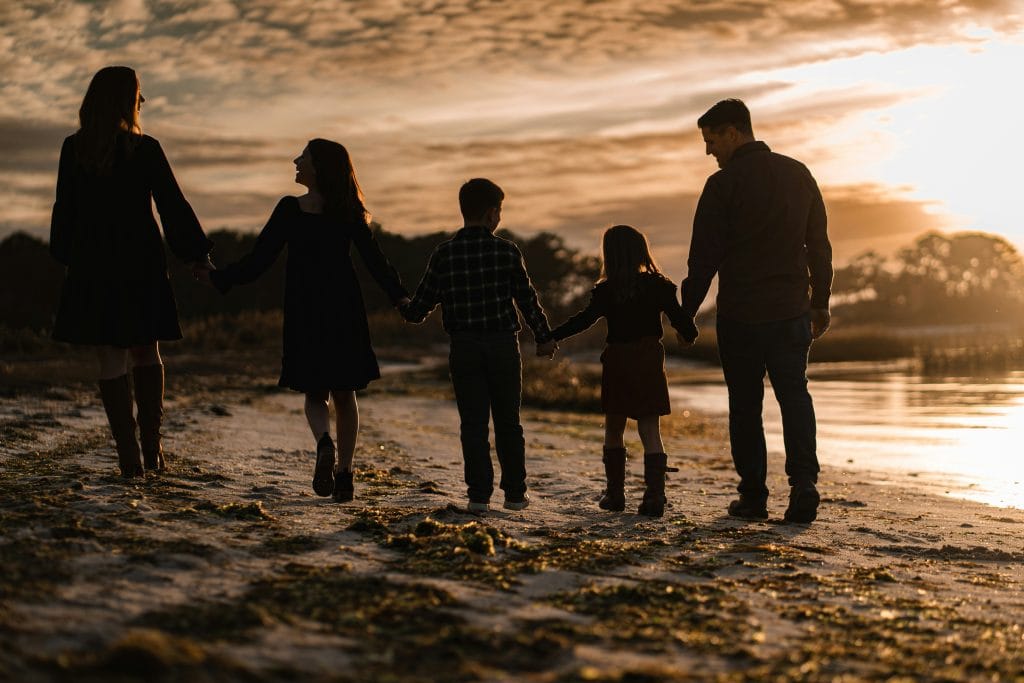
One summer night, years later, David and I sat on the porch watching June chase fireflies with Mark’s kids, their laughter rising like music. Robert sat in a chair nearby, older now, softer, holding a mug of tea he had made himself—plain, safe, no hidden poison.
David leaned toward me and said, “Do you remember the way she looked through the camera?”
I did. Perfect lipstick. Smug eyes. The certainty of a woman who believed she could lock me out of my own life.
“She thought she changed the locks on my house,” I said softly.
David nodded. “But she actually changed the locks on my mind.”
I looked at him, surprised.
He smiled. “She forced the moment where I had to choose. Her control, or our life.”
“And you chose,” I said.
David looked out at the field where June’s laughter carried in the warm air. “I chose freedom,” he said. “I chose you. I chose June. I chose myself.”
The porch light glowed steady. The night was quiet in the best way.
Patricia had once sneered that I should go find somewhere else to live.
She never understood that home isn’t just a door you lock.
Home is the life you build with the people who protect you instead of trying to own you.
And that was the ending.
Not the trial. Not the prison sentence. Not the drama.
The ending was a peaceful farmhouse where the locks belonged to us, where love meant safety, and where the only voices in the night were the ones we chose to keep.
THE END!
Disclaimer: Our stories are inspired by real-life events but are carefully rewritten for entertainment. Any resemblance to actual people or situations is purely coincidental.

Daniel Carter is a senior staff writer at InspireChronicle, specializing in legal conflicts, family disputes, and real-life justice stories. His work focuses on high-stakes situations involving inheritance, betrayal, and complex moral decisions. Through detailed storytelling, he explores how ordinary people navigate extraordinary challenges and the long-term consequences that follow.
His articles have gained significant traction online for their emotional depth and realism, resonating with readers across the United States.
He writes extensively about justice, personal responsibility, and the hidden dynamics within families.