
Why You Wake Up at the Same Time Every Night: Understanding the Meridian Clock
Many people notice a curious pattern in their sleep: they wake up at the same hour night after night. While modern medicine often explains this through stress, sleep cycles, or environmental factors, traditional Chinese medicine (TCM) offers another perspective. According to this ancient system, the body follows an energetic rhythm known as the meridian clock, where energy flows through specific channels linked to organs and emotions.
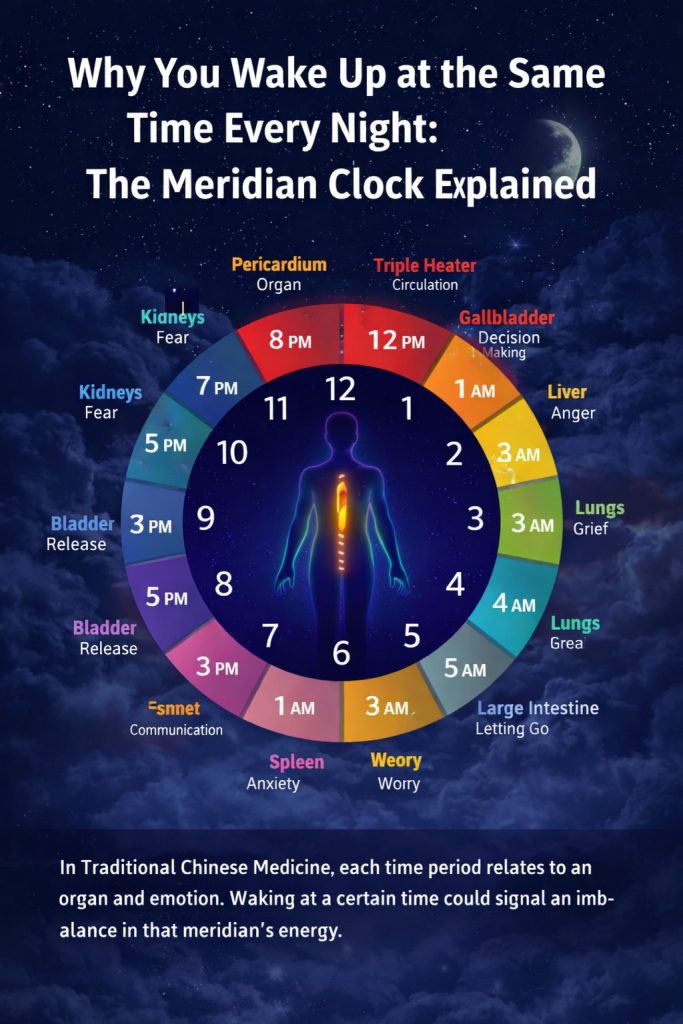
The meridian system suggests that fourteen primary energy pathways run through the body. Twelve of these follow a 24-hour cycle, with each meridian dominating a two-hour period. During its active window, the organs, emotions, and energy associated with that meridian become more sensitive or active. Understanding this rhythm may help explain patterns in sleep disruptions, energy fluctuations, and emotional states.
For many people, waking at a consistent time is not random. The meridian clock provides a framework for interpreting these patterns, linking them to possible physical, emotional, or energetic imbalances. Rather than viewing sleep interruptions as isolated events, this approach considers them signals from the body that may reflect deeper aspects of health and well-being.
What Is the Meridian Clock?
The meridian clock is a central concept in traditional Chinese medicine that describes how energy, known as Qi, circulates through the body. Each meridian corresponds to a specific organ system and becomes most active during a particular two-hour window.
Practitioners of TCM believe that when energy flows freely through these channels, the body maintains balance and health. However, when the flow becomes blocked or excessive, symptoms may appear in different ways. These may include fatigue, emotional distress, digestive issues, or disturbances in sleep.
Because each meridian becomes active at a specific time, waking repeatedly during the night may reflect an imbalance in the organ or emotional system connected to that meridian. The meridian clock therefore provides a structured method for interpreting why sleep disruptions occur at certain hours.
Why Nighttime Awakenings May Have Meaning
From the perspective of traditional Chinese medicine, waking during the night can have diagnostic significance. Instead of being random disturbances, these awakenings may indicate energetic imbalances or emotional stress connected to the body’s internal systems.
For example, someone who wakes at the same hour every night may be experiencing:
- Physical strain within a specific organ system
- Emotional tension or unresolved feelings
- Mental stress or persistent thoughts
- Internal changes linked to personal growth or transformation
These interpretations emphasize the holistic nature of health. According to TCM principles, physical, emotional, and mental states are deeply interconnected, and disturbances in one area often influence the others.
The Significance of Waking Between 3:00 and 5:00 a.m.
One of the most commonly discussed time windows in the meridian clock is between 3:00 and 5:00 a.m.. In traditional Chinese medicine, this period corresponds to the lung meridian.
The lung meridian is associated with:
- Breathing and respiratory health
- The movement of energy through the body
- Emotional processing, particularly grief or sadness
When individuals wake frequently during this period, practitioners may interpret it as a sign of emotional processing or energetic transformation. In some interpretations, this time frame is also linked to heightened intuition or spiritual awareness, especially if no medical explanation is present.
While such interpretations are not universally accepted in modern science, many people find that reflecting on emotional or mental stress during this time can offer valuable personal insights.
What Waking Around 1:00 a.m. Might Mean
Another notable time in the meridian clock occurs around 1:00 a.m., which falls within the active period of the gallbladder meridian.
From a physical standpoint, waking at this time may be connected to digestive processes or issues related to bile flow and metabolism. Emotionally, the gallbladder is linked to decision-making, courage, and stored frustration.
In traditional interpretations, people who wake during this period may be experiencing:
- Internal conflict or difficult decisions
- Lingering resentment or frustration
- Anxiety related to responsibility or expectations
Some holistic perspectives also suggest that this pattern can appear in individuals who invest significant emotional energy in others while neglecting their own needs. In such cases, the disruption may serve as a signal to reassess boundaries and personal balance.
The Holistic Nature of Sleep Patterns
One important aspect of the meridian clock is its recognition that health is rarely one-dimensional. Sleep disturbances may arise from a combination of biological, emotional, and psychological factors rather than a single cause.
For some people, waking at a specific hour may reflect an organ system under strain. For others, it may highlight emotional stress, unresolved experiences, or life transitions requiring reflection.
This perspective encourages individuals to observe patterns in their sleep and daily habits. When sleep disruptions occur consistently, they may represent signals pointing toward deeper aspects of well-being that deserve attention.
How the Meridian Clock Can Support Self-Reflection
Even for those who do not fully adopt traditional Chinese medicine, the meridian clock can still function as a useful tool for self-awareness. Paying attention to recurring sleep patterns may encourage people to examine their lifestyle and emotional health more closely.
If someone consistently wakes at a particular hour, they might consider exploring factors such as:
- Stress levels and emotional tension
- Diet and digestive health
- Sleep environment and routines
- Personal boundaries and energy management
Addressing these areas through healthy habits—such as stress reduction, balanced nutrition, and emotional processing—may help restore a sense of balance.
Final Thoughts on the Meridian Clock and Nighttime Awakening
The meridian clock offers a holistic framework for understanding sleep patterns and energy rhythms. While it should not replace professional medical evaluation—especially when symptoms are severe or persistent—it provides an alternative lens for exploring the connection between body, mind, and emotional health.
Waking at the same time every night may reflect more than a disrupted sleep cycle. It can also signal hidden tensions, emotional stress, or internal shifts that deserve attention. By observing these patterns with curiosity rather than frustration, individuals may gain deeper insight into their own well-being.
Ultimately, the meridian system encourages a compassionate relationship with the body, transforming nighttime awakenings from frustrating interruptions into opportunities for reflection, awareness, and personal growth.

Daniel Carter is a senior staff writer at InspireChronicle, specializing in legal conflicts, family disputes, and real-life justice stories. His work focuses on high-stakes situations involving inheritance, betrayal, and complex moral decisions. Through detailed storytelling, he explores how ordinary people navigate extraordinary challenges and the long-term consequences that follow.
His articles have gained significant traction online for their emotional depth and realism, resonating with readers across the United States.
He writes extensively about justice, personal responsibility, and the hidden dynamics within families.