
Woman Bought a $250 Mansion No One Wanted — What She Found Inside Changed Everything
When the auctioneer’s gavel came down with a tired clack, only one hand had been raised.
“Sold. Two hundred and fifty dollars.”
A few scattered laughs rippled through the half-empty county hall in Pine Ridge, Montana. Most people were there for farmland or repossessed trucks. No one—except Hannah Whitaker—had bid on the crumbling Victorian at the edge of town.
“Hope you like raccoons,” someone muttered behind her.
Hannah signed the paperwork with a pen that barely worked. Two hundred and fifty dollars. That was all she had left in her checking account after the hospital bills drained her savings and her ex-husband disappeared to Arizona with promises of “sending something when I can.”
She didn’t tell the clerk that she and her eight-year-old daughter, Lily, were living in her sister’s laundry room.
She didn’t tell anyone that she had once studied architecture before life rerouted her into waitressing double shifts at a diner off Highway 93.
And she definitely didn’t tell them that the “mansion” she’d just bought was rumored to be cursed.
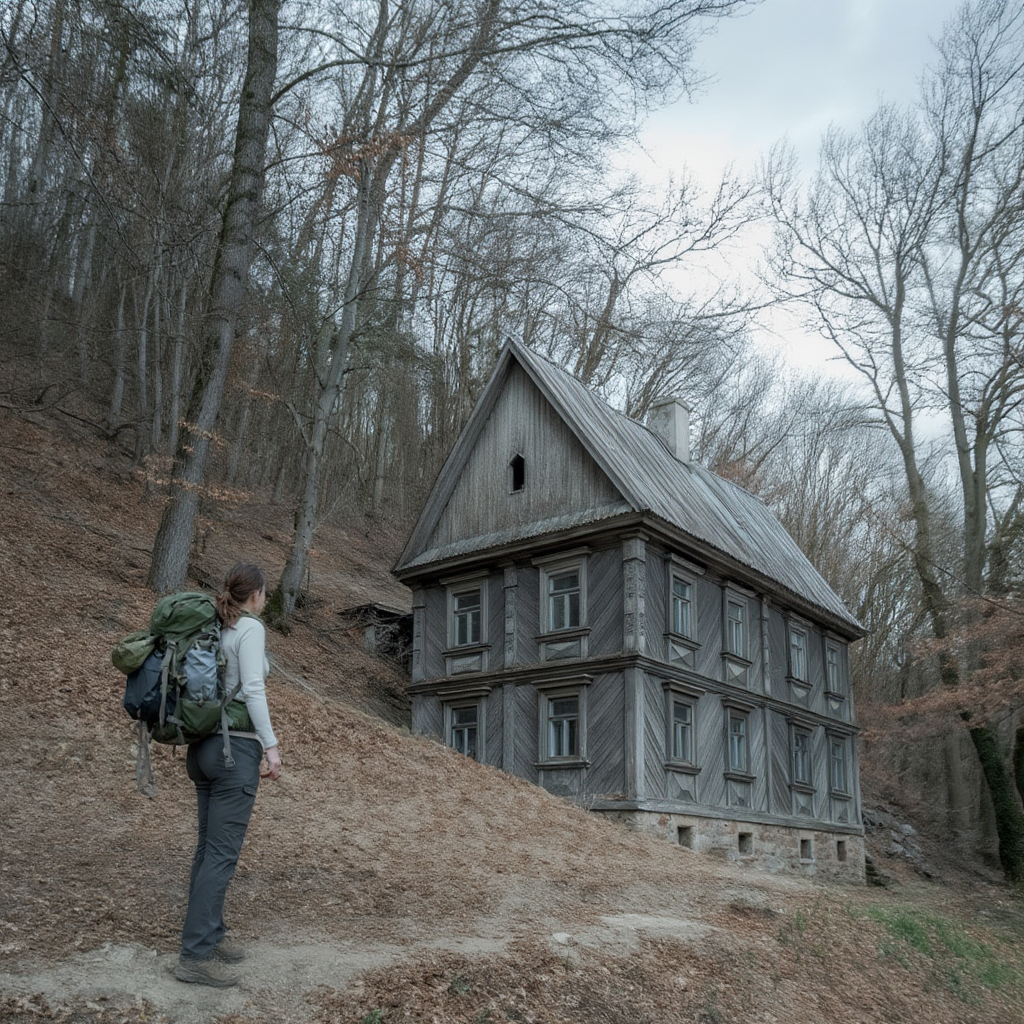
The house sat alone at the end of Willow Bend Road, its silhouette rising like a broken crown against the pale sky. Turrets leaned slightly. Shingles were missing. The wraparound porch sagged like a tired shoulder.
Lily squeezed Hannah’s hand when they first stood before it.
“Mom,” she whispered, eyes wide. “Is it… safe?”
Hannah swallowed. “Of course it is.”
It wasn’t.
Windows were boarded up. The front door hung crooked. The yard was choked with waist-high weeds. A rusted fountain in the center had long since dried up, its stone angel missing one wing.
But beneath the rot, Hannah saw lines. Craftsmanship. Curves of hand-carved wood. Brickwork that spoke of patience and pride.
Someone had loved this house once.
Inside, dust blanketed everything. The air smelled of old wood and time. Chandeliers drooped with cobwebs. Wallpaper peeled like shedding skin.
Lily coughed.
Hannah tied a bandana over her mouth and started opening windows, forcing light into rooms that hadn’t seen sun in decades.
They worked all afternoon.
They swept, hauled out broken furniture, and dragged moldy rugs to the yard. Hannah found newspapers dated 1958 tucked beneath a staircase. A cracked piano sat in the parlor, keys yellowed and silent.
The town had called it “worthless.”
She called it possible.
They moved in two days later.
Not because it was ready.
But because they had nowhere else to go.
Hannah set up sleeping bags in what used to be the master bedroom. At night, the wind howled through gaps in the eaves. The pipes groaned. Floorboards popped.
Lily tried to be brave.
“Maybe it’s just the house stretching,” she said one evening.
Hannah smiled. “Exactly.”
But privately, she wondered if she had made the worst mistake of her life.
Her sister had said it plainly.
“You bought a haunted ruin, Hannah. With what money are you fixing it?”
Hannah didn’t answer then.
She didn’t have one.
Three weeks passed.
Hannah worked mornings at the diner and afternoons scraping paint, replacing boards, and patching plaster. She sold her old engagement ring for lumber. She learned to rewire light fixtures from YouTube videos on her cracked phone.
One evening, while clearing debris in the east wing—a part of the house everyone in town said to avoid—Lily called out.
“Mom! There’s something weird in here!”
Hannah rushed in.
The room was smaller than the others, almost hidden behind a narrow hallway. Its walls were darker, lined with built-in shelves. Most were empty.
But in the far corner, beneath layers of dust, sat an old iron safe.
Hannah froze.
It wasn’t huge. About the size of a carry-on suitcase. Its surface was embossed with delicate scrollwork and the faint initials: E.R.
The dial was intact.
Locked.
“Is there treasure?” Lily whispered.
Hannah laughed nervously. “Probably old tax documents.”
But her heart hammered.
She asked around town.
“Ernest Ralston,” the old hardware store owner said when she mentioned the initials. “Built that house in 1912. Wealthiest man in Pine Ridge at the time.”
“What happened to him?”
“Died alone. No kids. Estate went to distant relatives who sold it off cheap. Been rotting ever since.”
“Was he… strange?”
The old man shrugged. “Kept to himself. Rumor was he hid money somewhere during the Great Depression.”
Hannah felt something spark inside her.
Money.
Hidden.
She didn’t tell Lily that part.
Breaking into the safe wasn’t easy.
Hannah couldn’t afford a locksmith. Instead, she spent nights researching antique lock mechanisms. She borrowed tools. She listened to the soft clicks of the dial like a musician tuning an instrument.
On the fourth night, just after midnight—
Click.
The handle shifted.
Hannah’s breath caught.
She opened it slowly.
Inside, she expected stacks of yellowed bills or jewelry.
Instead, she found:
- A leather-bound journal.
- A bundle of documents tied with faded ribbon.
- A small velvet pouch.
- And a photograph.
She lifted the photo first.
It showed a younger Ernest Ralston standing beside a woman and a little girl. The girl looked about Lily’s age. They were smiling in front of the mansion when it was new and proud.
On the back, written in careful script:
For my Evelyn, so she will always know her worth.
Hannah frowned.
She opened the velvet pouch.
Inside lay a heavy gold pocket watch—ornate, engraved. When she pressed it open, it still ticked.
The journal came next.
She sat cross-legged on the dusty floor and began to read.
Ernest’s handwriting was precise but heavy with emotion.
He wrote of losing his wife to illness. Of his daughter, Evelyn, growing distant after her mother’s death. Of business failures during the Depression that nearly destroyed him.
And then—
A passage dated October 1932:
If the bank takes everything, they will not take her future. I have secured what matters beneath stone and memory. Only one who sees value where others see ruin will find it.
Hannah’s pulse quickened.
Beneath stone and memory.
She turned to the documents tied with ribbon.

Daniel Carter is a senior staff writer at InspireChronicle, specializing in legal conflicts, family disputes, and real-life justice stories. His work focuses on high-stakes situations involving inheritance, betrayal, and complex moral decisions. Through detailed storytelling, he explores how ordinary people navigate extraordinary challenges and the long-term consequences that follow.
His articles have gained significant traction online for their emotional depth and realism, resonating with readers across the United States.
He writes extensively about justice, personal responsibility, and the hidden dynamics within families.