
The first sign something was wrong wasn’t the bulldozers.
It was the mailbox.
On a warm March morning in Cedar Ridge, Texas, a polished brass mailbox appeared at the edge of my pasture. It wasn’t mine. It stood three feet inside my fence line, planted neatly in fresh concrete, with a small black plaque that read:
Lot 12 – Willow Brook Estates
I owned 14.7 acres on the west side of town. My grandfather bought it in 1952 when Cedar Ridge was little more than a feed store and a two-lane road. My father raised cattle there. I built a modest brick house near the old pecan tree where my grandmother used to hang laundry.
There was no “Willow Brook Estates.”
Not on my land.
My name is Rachel Whitaker. I’m 38 years old, a third-generation Texan, and I don’t scare easily. But when I saw that mailbox, something cold settled in my chest.
Because I knew what it meant.
Someone thought my land was theirs.
Two weeks later, the survey stakes appeared.
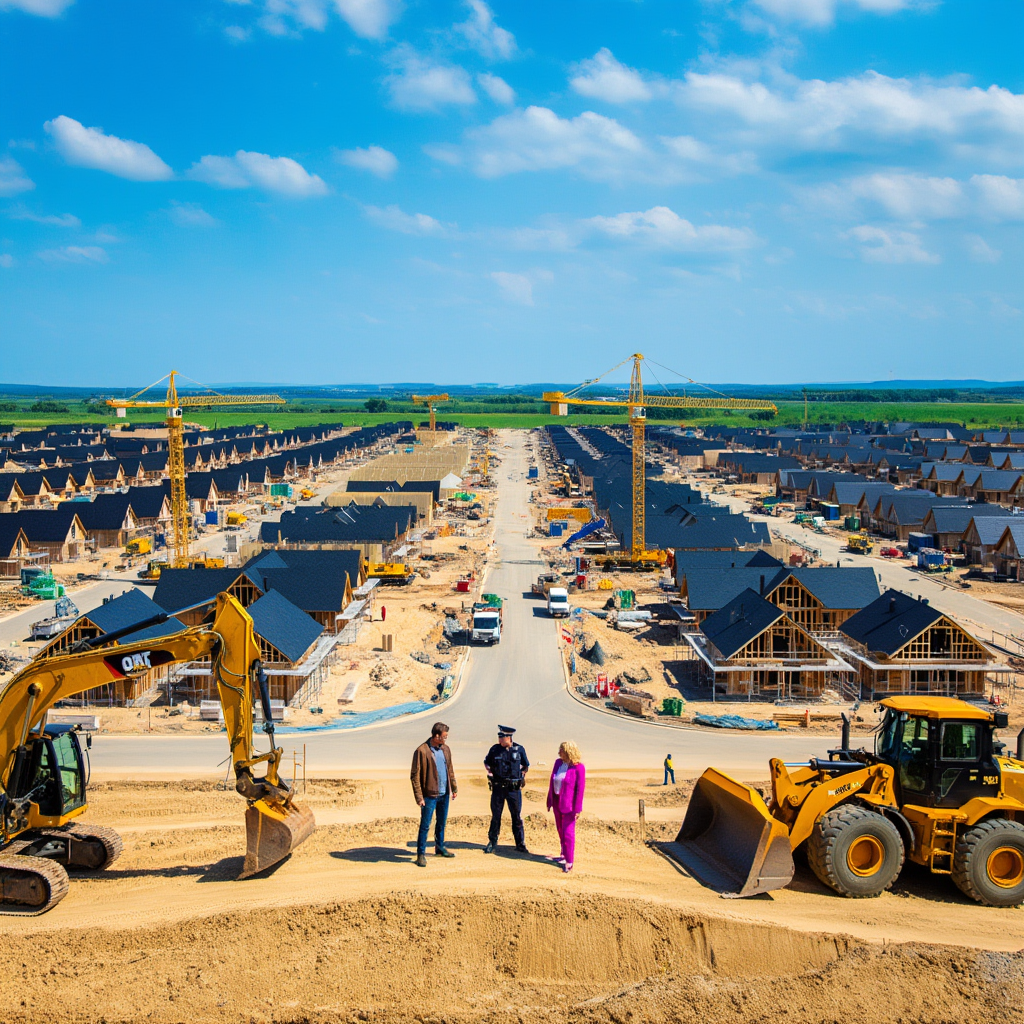
Bright orange flags lined the southern half of my pasture. Spray-painted numbers marked the grass in precise rectangles. Then came the trucks—dump trucks, concrete mixers, utility vans with the logo of Lone Star Development Group splashed across the doors.
I drove straight to the site manager, a man in a crisp polo shirt and mirrored sunglasses.
“You’re on private property,” I said.
He glanced at his clipboard. “Ma’am, this is Phase Two of Willow Brook Estates. Ninety-six residential lots. We’ve got permits from the county.”
“You have permits,” I replied slowly, “for land I own.”
He smiled the kind of smile people use when they think you’re confused.
“You might want to take that up with the HOA.”
The HOA.
I didn’t even live in a neighborhood with an HOA.
That night, I pulled my grandfather’s deed from the fireproof safe in my bedroom closet.
It was thick, cream-colored paper, edges worn but intact. The legal description ran long and precise—metes and bounds tracing fence posts, creek bends, and oak trees that had stood longer than any zoning board.
I’d inherited the property cleanly after my father passed. No liens. No encumbrances. No subdivisions.
I called my attorney the next morning.
His name was Daniel Cho. Soft-spoken. Methodical. The kind of lawyer who read every footnote twice.
“Rachel,” he said after reviewing the scanned deed I emailed him, “you own that land. Period.”
“Then how are they building on it?”
He paused.
“Because someone filed a replat.”
A replat.
Two months earlier, Lone Star Development Group had submitted revised boundary documents to the county clerk’s office. The paperwork showed that the southern half of my land had been merged into an expanded subdivision. The document listed a prior transfer from “Whitaker Holdings.”
There was no Whitaker Holdings.
But the signature on the transfer line looked disturbingly similar to mine.
Forgery.
Daniel didn’t sugarcoat it.
“They’re betting you won’t fight,” he said. “Developers move fast. Once homes are up and families move in, judges hesitate to tear everything down.”
By the time we filed a formal injunction request, foundations were already poured.
The town buzzed.
Willow Brook Estates marketed itself as “Affordable Luxury Living in the Heart of Cedar Ridge.” Billboards went up along Highway 27. Pre-sales opened online. Families from Dallas began putting deposits down.
Ninety-six homes.
On my pasture.
Neighbors started avoiding eye contact at the grocery store. Some assumed I’d sold. Others assumed I was greedy for trying to stop “progress.”
The HOA president, a woman named Karen Bellamy, finally came knocking.
She wore a navy blazer and a tight smile.
“Ms. Whitaker, we understand there’s some confusion,” she began. “But our board has documentation showing the land transfer was lawful.”
“Show me,” I said.
She handed me photocopies of the forged deed.
My signature was there—close enough to pass at a glance.
But I knew every loop and angle of my name.
“That’s not mine,” I said flatly.
She sighed as if I were being unreasonable.
“Construction is 40% complete. Families have invested life savings. It would be catastrophic to halt this now.”
I looked past her shoulder at the skeletal frames rising over my field.
“Catastrophic for who?”
Daniel advised patience.
“We let them finish,” he said.
I stared at him across his oak desk.
“You’re telling me to watch them build an entire neighborhood on my land?”
“I’m telling you,” he replied carefully, “that once all ninety-six homes are standing, the financial exposure will be too large to ignore. A judge won’t dismiss a forged deed when millions of dollars are at stake.”
So I waited.
It was the hardest thing I’ve ever done.
Day after day, I watched my pasture transform.
Concrete streets curved where my father once baled hay. Streetlights rose where bluebonnets bloomed in spring. Houses—two-story colonials, craftsman-style porches, tidy vinyl fences—sprouted like they’d always belonged.
The Willow Brook Estates sign went up last.
A stone monument at the entrance.
It stood three feet inside my original fence line.
By autumn, all ninety-six homes were complete.
Moving trucks rolled in.
Children rode bikes along sidewalks poured over my soil.
The HOA sent out welcome packets.
And Daniel filed the lawsuit.

Daniel Carter is a senior staff writer at InspireChronicle, specializing in legal conflicts, family disputes, and real-life justice stories. His work focuses on high-stakes situations involving inheritance, betrayal, and complex moral decisions. Through detailed storytelling, he explores how ordinary people navigate extraordinary challenges and the long-term consequences that follow.
His articles have gained significant traction online for their emotional depth and realism, resonating with readers across the United States.
He writes extensively about justice, personal responsibility, and the hidden dynamics within families.